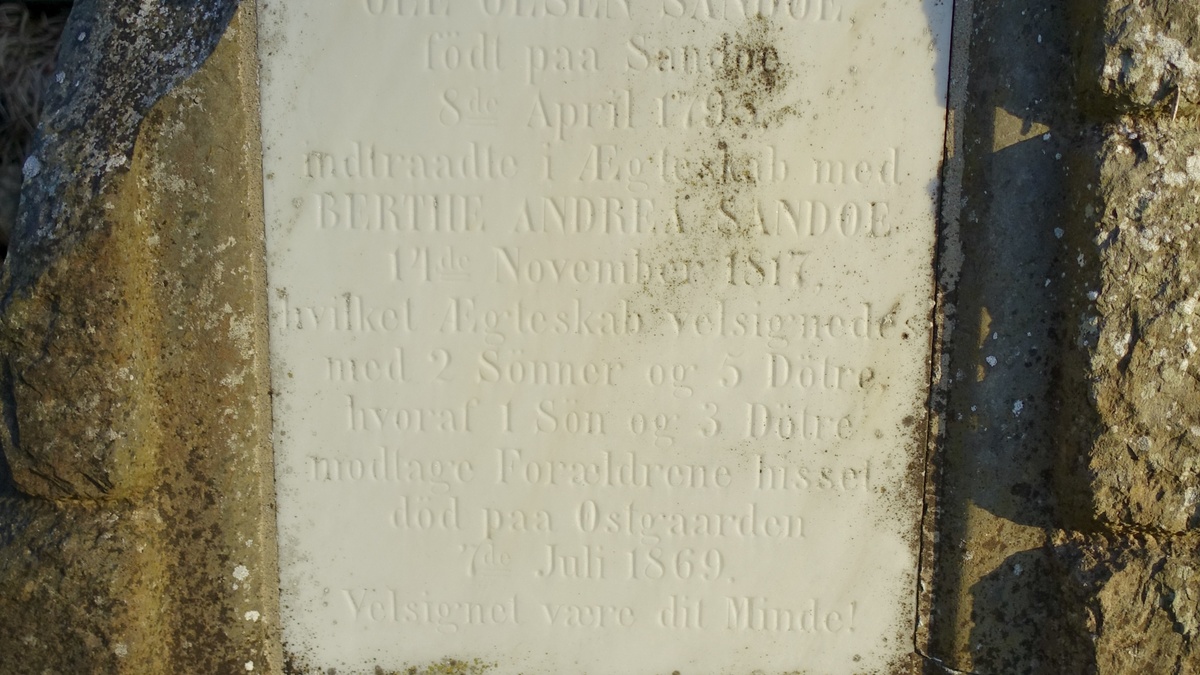
For twenty-two years of Sundays, Corinne Shiflett had knelt at her father's grave, and she had never once noticed the second name carved low on the back of his stone, under the moss, where no name belonged.
It was a small name. Six letters, very shallow, low on the back of the granite where the ground had crept up around it over the years. On a gray afternoon, it was invisible. But the first Sunday in December came up cold and clear, and the sun was low over the Blue Ridge, and the light hit the back of the stone at a long, flat angle.
Corinne was kneeling to pull the dead leaves away from the base when she saw it.
Letters. Carved, then left to the weather.
She sat back on her heels in the frozen grass of the Mount Moriah churchyard and looked at them a long time.
Corinne was seventy-five. Her father, Virgil Shiflett, had been a stonecutter in the Shenandoah Valley for fifty years. He had carved half the headstones in that churchyard with his own hands, in the little shed behind their house in Elkton Hollow, Virginia, with a mallet and a set of chisels he had bought in 1946.
She knew his work the way you know your father's handwriting. The slight tilt of his capital R. The way he cut his serifs a little deeper than other carvers, so they would hold their shadow longer as the stone weathered.
He had carved his own stone, too, two years before he died. He had cut his name and his dates and their mother's name and her dates on the front, and left room on the bottom for the day.
Corinne had never once looked at the back.
She went home and found her father's old tools.
They were still in the shed behind her house, which had been his house, on the same wooden rack where he had left them in 2004. Chisels, mallets, rasps. A soft brush with a wooden handle. A coffee can of blackboard chalk.
When she was a girl, her father had taken her with him to old cemeteries to read stones the rest of the county could not read. He showed her the trick. You do not scrub a stone. You do not use a wire brush or bleach or shaving cream, the way some people do, because all of that eats the stone. You brush it clean with water and a soft brush. Then you wait for low light, early morning or late afternoon, when the sun comes across the face at a slant.
And if the light won't cooperate, you bring your own. A flashlight held flat against the stone, so it rakes across the carving and fills every cut with shadow.
"A stone will tell you anything," he used to say, "if you ask it from the side."
She went back on Monday at four o'clock with a gallon jug of water, the soft brush, and his old flashlight.
She brushed the back of the stone clean, slowly, the moss and the lichen and twenty years of dust. Then she knelt in the cold grass and held the flashlight flat against the granite, low, so the beam slid across the surface.
The letters came up out of the stone like a photograph in a developing tray.
They were not her father's. That was the first thing she saw. They were cut by a beginner, shallow and uneven, with no serifs at all. Somebody who did not know how to carve, carving anyway, very carefully.
They said:
LILLIAN 1949
Corinne put her hand over her mouth.
She had been born in March of 1950. She had been an only child. Her mother, Ida, had told her so many times that she had stopped hearing it. You were our miracle, Corinne. We waited so long for you.
Not one person had ever said anything about 1949.
She asked her cousin Doris first. Doris was eighty-four and lived in the next hollow and remembered everything about the family, especially the things it did not want remembered.
Doris was quiet on the phone for a long time.
"I don't know, honey," she said finally. "I was seven. I remember your mother was sick that year. In bed a long time. And I remember your daddy didn't work in the shed all that winter. That was the only winter I ever remember that shed being cold."
"Doris. Was there a baby?"
"I don't know." Doris's voice wavered. "We weren't told things, back then. The grown folks talked in the kitchen with the door shut."
She asked the preacher at Mount Moriah. He was young and kind and had only been there four years. He went through the old church burial book with her on Wednesday afternoon. There was no Lillian Shiflett listed. There was no burial at all in 1949 in that part of the churchyard.
"Mrs. Shiflett, sometimes," he said gently, "in those days, if a baby was stillborn, families buried them quietly. On their own land. Or not at all, in the record."
"Then why is her name on my father's stone?"
The preacher had no answer for that.
Her son called from Richmond on Thursday. He was a doctor, and busy, and practical.
"Mom, I love you," he said. "But that stone's been out in the weather twenty-two years. Maybe somebody else scratched it on there. Kids. A prank. I don't want you out there in the cold every afternoon with a flashlight, chasing this."
"Your granddaddy carved that stone himself, Brian."
"Then maybe he made a mistake and covered it up. You said it yourself. It's not his carving."
Corinne hung up and sat in her kitchen and looked out the window at her father's cold shed.
He was right about one thing. It was not her father's carving.
So whose was it?
On Friday, she went back to the churchyard at dusk to look one more time. She brought the flashlight. She did not bring much hope.
The stone was cold and dark. She knelt in the grass and held the light flat against it and read the name again. LILLIAN. 1949. Shallow, uneven, careful.
Then she moved the flashlight lower, below the name, to the place where the ground met the granite.
There was more.
Something had been carved down there, below the ground line. The dirt and grass had crept up over it in the years since. She could see the top of one curved letter, just barely, where the earth had pulled back in the frost.
Corinne set the flashlight in the grass, pointed sideways along the stone, and began to dig at the frozen churchyard with her bare hands.